

The Next 5-10 Years of Casino Operations: What Will Matter
By Stephane Henault, Technical Director, DR Gaming Technology™
I’ve spent more than 20 years working with casino management systems. During that time, I’ve seen how technology has changed almost every aspect of casino operations. Systems have become more sophisticated, and we now have access to far more data far more quickly. At the same time, players have come to expect more. They want greater convenience, offers based on how they play, and experiences that reflect their preferences.
Looking ahead, the biggest challenge for the industry won’t be finding more tech. It’s going to be making technology simpler, more connected and more useful. That distinction matters. Operators need technology that allows them to run better businesses, understand their customers, and deliver experiences that players want to come back for.
Automation will do more of the work
We still spend too much time installing and configuring systems, and then training people to operate them. Increasingly, these systems should be capable of configuring and managing themselves. Why should operators need to become experts in the technology behind their casino management systems? The technology should be doing more of the work.
AI will inevitably become part of that process. It can help identify configuration requirements, automate repetitive tasks, flag potential problems, and support installation and deployment in ways that reduce both time and the level of hands-on intervention required. The operator should be focused on the player, not on operating the tech.
Integration needs to connect the whole experience
The casino of the future cannot be a collection of separate systems that happen to exist under the same roof. Gaming, payments, loyalty, hospitality, food and beverage, and entertainment all need to work together as one connected operation.
As an industry, we’ve talked about integration for years, but what matters is how it works in practice. A player should not have to think about which system they are using. They should be able to move between gaming, rewards, payments and the wider resort experience without it feeling like they’re moving between separate technology platforms.
The same applies to operators. Fragmented technology makes it harder to understand the player. The more connected the system, the greater the value of the player data.
The cash desk will become a player wallet
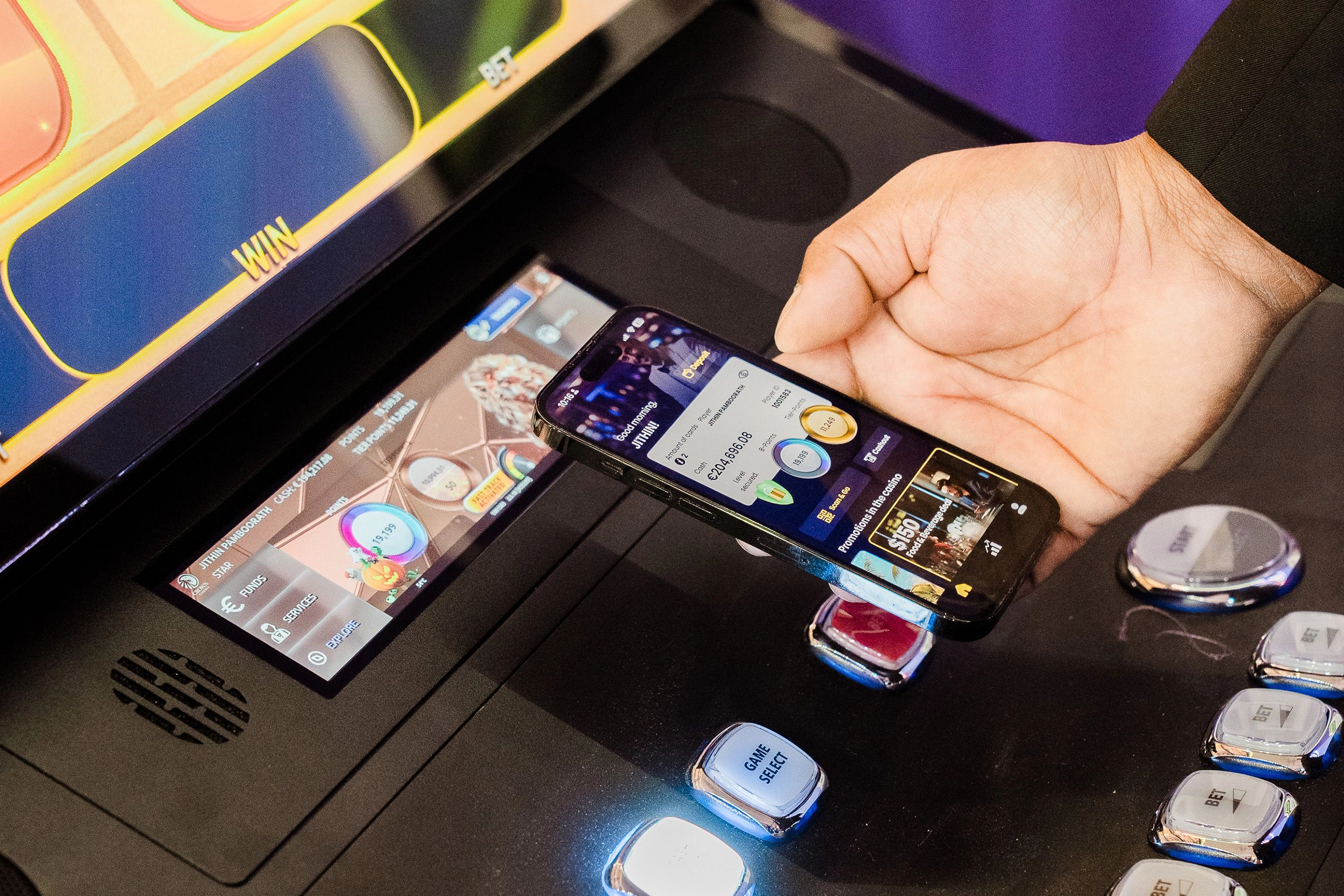
One of the clearest examples of greater integration across the casino operation is the relationship between players and their money. The traditional cash desk has been central to casino operations for decades. But the concept of a player wallet is much more powerful. Imagine a player having one wallet to manage their land-based and online gaming, access rewards, pay for food and beverage, redeem promotions, and enter raffles.
The wallet becomes much more than a payment mechanism. It becomes the player’s relationship with the operator. Financial responsibility remains with the player. The point is to give players greater control, transparency and convenience.
For operators, the implications are even bigger. If the wallet works across online and land-based gaming, the operator is no longer confined to the hours and physical footprint of a casino. The business becomes a 24-hour, anywhere entertainment proposition.
Land-based operators need to know their players better
When it comes to understanding and segmenting players, the gap between online and land-based gaming is significant. Online operators know a huge amount about their players. They can understand behaviour, preferences, frequency, patterns and changes in activity in ways that land-based casinos have historically found more difficult. That has to change.
Land-based casinos already generate huge amounts of information. The problem is not a lack of data. It is knowing what to do with it. AI will become increasingly important because there is simply too much information for humans to analyse effectively on their own. But AI is not the end goal. Better intelligence is. We need to mine the data, analyse it and turn it into something operators can actually use.
Who is this player?
What do they value?
What makes them return?
What might cause them to leave?
Which offers will mean something to them?
And, perhaps more importantly, what should we do next?
Loyalty will depend on what matters to the individual player
This is where marketing and promotions will change considerably. Consumers increasingly expect businesses to understand who they are, what they like, and what is relevant to them. Gaming customers are no different.
Take player bonusing. If we understand an individual player’s betting patterns and preferences, we should be able to give them an offer that actually means something to them. Sending an offer simply because the system can is not enough. If it isn’t relevant, it’ll just irritate them. There needs to be a genuine reason. That’s the difference between just sending a promotion and genuinely engaging a player.
Operators are not only competing with other casinos. They are competing for a share of each player’s entertainment spend. A player’s disposable income is limited, and gaming is only one of many ways they can choose to spend it. That money could just as easily go towards restaurants, travel, a new car, golf, or other forms of entertainment. If the gaming experience and offers are not relevant to that player, they will spend their money elsewhere.
Online will help land-based gaming, not kill it
I don’t see online and land-based gaming as competing in the same way. They’re different experiences. Think about streaming a movie at home and going to the cinema. You can watch almost anything at home, but people still go to the cinema because the physical experience provides something that streaming can’t.
A land-based casino can offer something online can’t replicate. The service, atmosphere, social interaction, sound, lighting, food, drink – the entire environment. So, the question isn’t how land-based gaming can become more like online. It’s how we can use what we know from online activity to make the land-based experience better.
We can also create a stronger connection between the two channels through the games themselves. The mathematics and mechanics of online and land-based games will not necessarily be the same, nor should they be. But players should still recognise the brand, the game themes and the player proposition across both. That is where convergence between the two becomes powerful.
The best technology will be the technology players don’t notice
I think this is what the next five to ten years will be about. Players shouldn’t have to care which system is processing their payment or which database contains their loyalty information. They don’t need to understand how the casino management system connects gaming, hospitality and marketing.
Operators shouldn’t have to spend time managing technology instead of running their business. The technology needs to work in the background, connecting everything and turning data into intelligence. When that happens, it’s doing what it should.
The casino of the future won’t be the one with the most technology. It’ll be the one that uses technology most effectively to understand its players, simplify its operation and deliver an experience worth coming back for. That, ultimately, is what will matter.
About the Author
Born in Menton in the South of France, Stephane Henault studied electronics at university before joining Nice-based start-up Micro Clever Consulting (MCC) in 1999. At MCC, he was integral to the growth of the casino management systems company and its flagship Open Casino Manager™ product, which achieved a market-leading position in France and a presence in 75 European casinos covering approximately 8,000 slot machines. MCC was acquired by Bally Gaming and Systems in April 2003, after which Henault was appointed Services Director. He joined DRGT™ in March 2026.